Shin pain does not always sit in the same spot, and the location tells you something about the cause.
Posterior shin splints show up along the inner border of the tibia and are commonly linked to pronation and midfoot weakness. When the arch of the foot collapses repeatedly with each stride, the tibialis posterior muscle works overtime trying to support it. That strain accumulates.
Anterior shin splints sit more along the outer front edge and are often connected to running mechanics. Runners who lack sufficient knee drive sometimes compensate by pulling the foot up more aggressively into dorsiflexion to clear the ground, which overloads the front compartment of the shin.
Getting the diagnosis right early shapes everything about the treatment plan that follows, because the muscle groups, movement corrections, and strength priorities differ considerably between the two.
How Alpha Sports Medicine Assesses Shin Splints
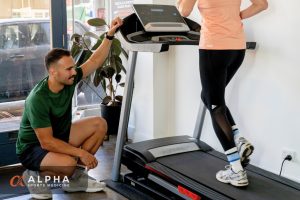
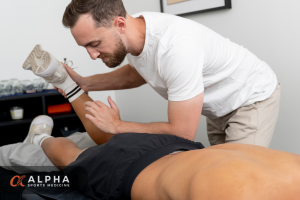
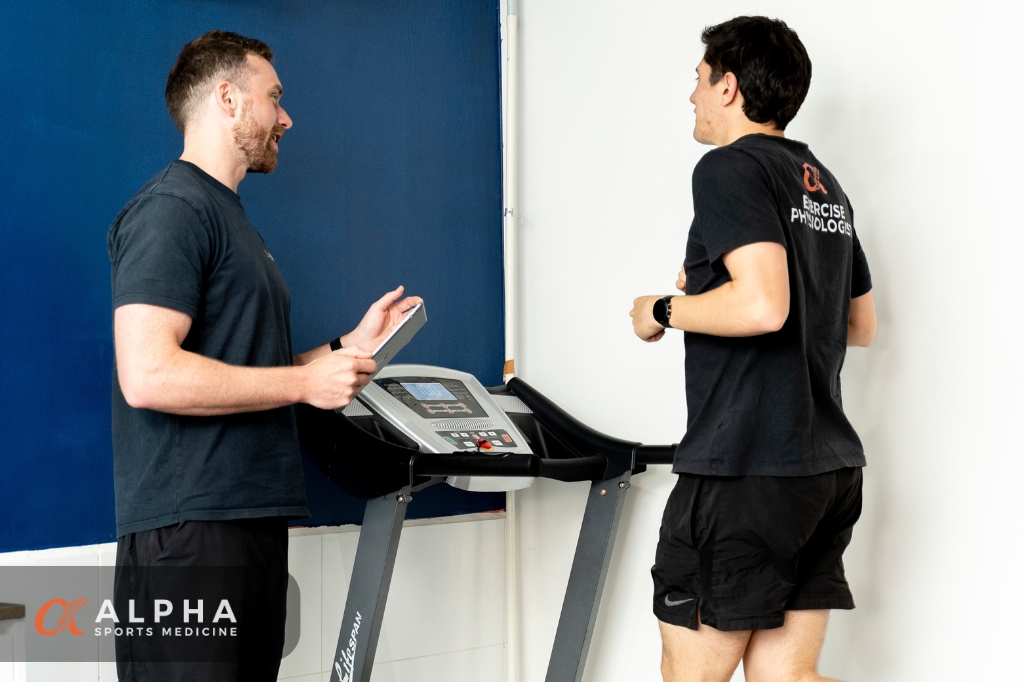
At the Alpha Sports Medicine Newport clinic, assessment starts with palpation along the tibia, mapping where the tenderness sits and how concentrated it is. From there, muscle testing looks at the strength of the calf and surrounding structures. Functional testing covers the squat pattern, lunge pattern, and running gait.
The questions driving the assessment go beyond confirming the diagnosis. Is this a load management issue? A footwear problem? Weakness in the foot, the ankle, the hip? The more precisely the cause is understood, the more targeted the rehabilitation can be, and the less likely the injury is to return.Most runners dealing with shin pain make the same call: ease off for a few days, let it settle, then pick training back up. For many people, that cycle repeats itself before they seek help, by which point the problem has usually been building for weeks.
Shin splints treatment in Newport is not just about offloading an irritated tibia. It is about finding out why the tibia is struggling in the first place, and fixing the conditions that keep putting it under stress every time you return to running.
Why Shin Splints Do Not Resolve with Rest Alone
The technical term is medial tibial stress syndrome, but the mechanics are straightforward. Load goes in, the bone and surrounding tissue absorb it, and over time, if the load consistently exceeds what the tissue can handle, pain develops along the shin. A sudden spike in training volume is the most common trigger.
What rest does is remove the load. The pain settles. The underlying problem, whatever was making the tissue vulnerable in the first place, does not change. So when training resumes, the same load goes back into the same tissue, and the cycle restarts.
That is why understanding the biomechanical picture matters. Foot mechanics, hip strength, running gait, footwear choice, any of these can be contributing to the stress the tibia absorbs with each stride.
Anterior vs. Posterior Shin Splints: Why the Location Matters
Exercises That Address the Underlying Cause
Strength work is a central part of recovering from shin splints and reducing the risk of recurrence. A structured approach typically targets a few key areas.
Calf raises and soleus raises
The calf complex absorbs significant force during running. Strengthening it progressively, with particular attention to the deeper soleus muscle, reduces how much stress reaches the tibia with each footfall. Soleus raises are performed with the knee bent, which isolates this muscle away from the gastrocnemius.
Intrinsic foot exercises
Short foot exercises, toe spreading drills, and single-leg balance work build the small muscles of the foot that support the arch. For runners with posterior shin splints linked to pronation, this is often a missing piece in their strength program.
Hip flexor strengthening
Generating good knee drive during running depends on hip flexor capacity. Runners who lack this tend to compensate lower down the chain, loading up the front of the shin. Targeting the hip flexors changes the mechanics at the foot and ankle before the issue compounds.
A structured exercise rehabilitation program builds these progressively, tracking how the body responds and adjusting load before problems resurface. Manual therapy and dry needling can also support recovery, with dry needling in particular helping improve blood flow and tissue recovery alongside the strength work.
What the Recovery Timeline Looks Like
Recovery from shin splints varies. A straightforward case with early intervention and good compliance with a rehab program can settle over four to six weeks. More established presentations, or cases where the underlying cause is more complex, typically take longer, sometimes ten to twelve weeks with a structured return-to-run progression.
The return-to-run phase needs to match the demands of the sport. A distance runner and a field sport athlete have very different loading patterns, and their plans should reflect that. A good starting point for someone returning from scratch is the Couch to 5K structure, which builds volume progressively over six to eight weeks and gives the tissue time to adapt.
Pain settling does not signal the end of rehabilitation. Strength deficits and movement patterns need to be addressed before training loads return to normal. If only the pain is managed, the same vulnerabilities that caused the injury remain in place.
When to Seek Professional Help
Some presentations of shin pain warrant getting assessed sooner rather than later. Consider booking in if:
- The pain has persisted for four to six weeks or longer
- Pain is getting progressively worse despite reducing load
- You are noticing aching at rest or overnight
- There is visible swelling along the shin
- Numbness or tingling is present in the lower leg
These signs can indicate a bone stress reaction, which sits further along the spectrum from shin splints and carries a considerably longer recovery pathway. This often requires offloading in a boot and a supervised return-to-run program over several months. Getting assessed early, before the injury progresses, changes the outcome.

Book an Assessment at Alpha Sports Medicine Newport
Shin pain that keeps coming back is not something to train through. The team at Alpha Sports Medicine Newport can assess what is driving the problem, build a rehabilitation plan around your specific goals, and support you through the return to full training.
Exercise rehabilitation, manual therapy, and dry needling are all available as part of a tailored recovery program.
Book an appointment at Alpha Sports Medicine and experience the tremendous success of osteopathy.