You feel it when you stand up after a long meeting, or halfway through a set of Bulgarian split squats, or on the third kilometre of your Saturday run. A pull at the front of the hip, sometimes sharp, sometimes just a dull tightness that won’t quite release. Hip flexor pain shows up in a lot of different people for a lot of different reasons, and the front-of-hip ache that hits a desk worker after eight hours in a chair isn’t the same injury as the one that sidelines a squatter mid-lift or an AFL player after a hard training block.
At Alpha Sports Medicine in Bacchus Marsh, we see hip flexor pain across almost every group we treat: gym-goers building strength, weekend runners chasing a PB, footballers managing preseason load, and office workers who go straight from a desk chair to a deadlift bar. The cause matters, because it changes what actually fixes the problem.
What Is the Hip Flexor, Exactly?
The hip flexor isn’t one single muscle. It’s really two muscles working as a team, the psoas and the iliacus, which together form what’s known as the iliopsoas. This muscle group runs from your lower spine and pelvis down to the top of your thigh bone, and its job is to lift your knee toward your chest and bend your torso toward your legs. Every step you take, every squat, every stride during a run relies on it.
Because the iliopsoas connects so many structures (spine, pelvis, hip joint), pain here can be a genuine hip flexor strain, or it can be a symptom of something happening elsewhere in the kinetic chain. That’s part of why hip flexor pain often needs a proper assessment rather than a guess and a foam roller.
Desk Job or Deadlift? The Two Faces of Hip Flexor Strain
The strategic thing to understand about hip flexor pain is that it tends to arrive by one of two very different routes: prolonged sitting, or physical load. Most people fall into one or the other, though plenty of our Bacchus Marsh patients manage to hit both in the same week.
Sitting Too Long
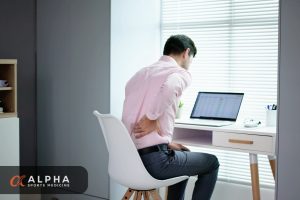
Desk workers are one of the biggest groups we see with tight hip flexors. Sit for eight or more hours a day and the iliopsoas spends most of its time in a shortened position. Over months, that shortening becomes the muscle’s new resting length. Then you stand up, head to the gym after work, and ask a chronically shortened muscle to suddenly lengthen and fire through a full range of motion. That mismatch is a common trigger for hip flexor strain in people who’d never think of themselves as “at risk” of a training injury.
Gym Training
Bulgarian split squats and walking lunges are two of the most common culprits we see in gym-goers. Both exercises put you in a deep hip extension position on the back leg, loading the hip flexor directly. When pelvic stability is compromised (often from fatigue, poor bracing, or simply going too heavy too soon) the hip flexor ends up compensating for muscles that should be doing more of the work. Squatters and deadlifters run into a similar pattern when technique breaks down under load.
Running
Overstriding is the main mechanical issue we see in recreational runners. Reaching too far forward with each step puts the hip flexor through repeated end-range loading, and small strains can accumulate long before a runner notices pain during the run itself. It often shows up afterward, as stiffness the next morning or a nagging ache that doesn’t fully settle between sessions.
AFL and Kicking Sports
Explosive hip flexion, sprinting, and repeated kicking all place heavy demand on the iliopsoas, which is a big reason hip and groin strains are so common in AFL. The kicking motion in particular asks the hip flexor to accelerate the leg forward at speed, over and over, across a full training week. Combine that with preseason load spikes and you’ve got one of the more predictable causes of hip flexor pain in footy players.
When to See an Osteopath for Hip Flexor Pain
A mild ache that settles with a day or two of rest usually isn’t cause for concern. But if you’re dealing with pain at the front of your hip that doesn’t ease, that worsens with activity, or that’s affecting how you walk or train, it’s worth getting it looked at sooner rather than later.
Hip flexor pain that persists needs a proper diagnosis because several other conditions can mimic it. Femoroacetabular impingement (FAI) and other hip joint pathologies can present with very similar front-of-hip pain, and treating a joint problem like a muscle strain (or vice versa) wastes time and can let the real issue progress. An osteopath can assess your hip properly, rule out what it isn’t, and confirm what it is before building a treatment plan.
As a general guide, book an assessment if:
- Your pain has lasted more than a week without improving.
- It’s sharp rather than a dull ache.
- It’s affecting your gait or your ability to train.
- It keeps returning every time you go back to the gym or start running again.
How Osteopathy Helps With Hip Flexor Pain
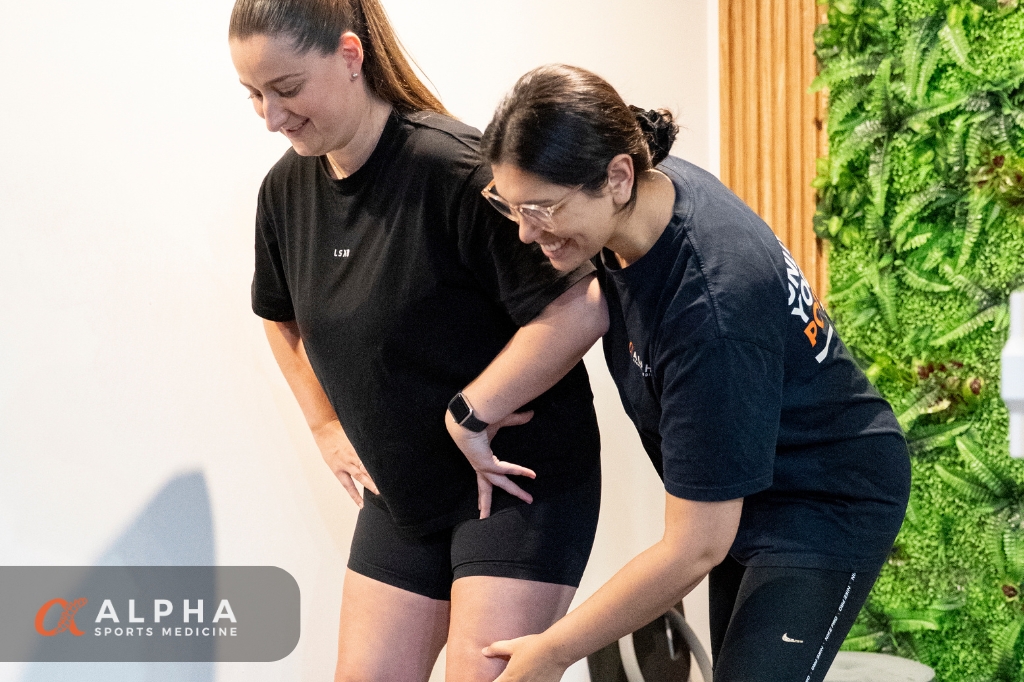
Osteopathic treatment for hip flexor pain starts with working out why the strain happened, not just where it hurts. For runners, that means assessing gait and looking at stride length, cadence, and how the hip is loading through each phase of the run. For gym-goers, it means reviewing technique on the lifts that tend to aggravate the hip flexor, checking pelvic control under load, and identifying where stability is breaking down. Desk-based patients often need a different conversation entirely, one focused on how long postural shortening is contributing to the strain and what needs to change day to day, not just in the gym.
From there, treatment typically draws on a mix of manual therapy techniques to support recovery and reduce pain, tailored to what’s actually driving your particular case. If you’re managing a hip issue that’s connected to running load, our team also works closely with patients on running injuries more broadly, since hip flexor strain rarely shows up in isolation from the rest of the kinetic chain.
Preventing Hip Flexor Strain
Once the acute pain has settled, prevention comes down to a handful of habits that address both the muscle itself and the structures around it.
Stretching the hip flexor directly is a good starting point. A gentle half-kneeling lunge position, where you kneel on one knee and lean forward into the front hip, gives the iliopsoas a controlled stretch without forcing the joint into an aggressive range.
Strengthening the glute max matters just as much as stretching the hip flexor. The glute max is the hip flexor’s counterpart, responsible for hip extension, and a stronger glute takes load off an overworked iliopsoas by doing more of the work it’s meant to do.
Hip flexor-specific strengthening rounds out the picture. Knee raises using a resistance band around the foot, or a light kettlebell on the foot, build strength through the exact range where strains tend to happen.
Lower abdominal strength is often overlooked but plays a real role in hip flexor pain, because the transverse abdominis helps stabilise the pelvis during hip flexion. Dead bugs and slow mountain climbers are both effective for building that support.
Quad strengthening, through movements like knee extensions, rounds out a well-balanced lower limb and reduces the chance of the hip flexor compensating for weaker muscles nearby.
Hip Flexor Pain: Your Questions Answered
| Question | Answer |
|---|---|
| What causes hip flexor pain? | Hip flexor pain typically comes from either prolonged sitting, which shortens the iliopsoas over time, or physical load during training and sport. Gym-goers often strain the hip flexor during exercises like Bulgarian split squats and lunges when pelvic stability breaks down. Runners tend to develop it from overstriding, and AFL players are prone to it from repeated kicking and explosive sprinting. |
| Is hip flexor pain the same as a hip flexor strain? | Not always. Hip flexor pain can range from muscle tightness through to an actual hip flexor strain, where the muscle fibres are damaged. Pain that is sharp, that worsens with activity, or that does not settle within a week or two is more likely to be a genuine strain and is worth having assessed. |
| When should I see an osteopath for hip flexor pain? | See an osteopath if your hip flexor pain lasts longer than a week, feels sharp rather than dull, affects your walking or training, or keeps returning. An early assessment also helps rule out other conditions, such as femoroacetabular impingement, that can feel similar to a muscle strain. |
| What exercises help with hip flexor pain and tight hip flexors? | A half-kneeling hip flexor stretch, glute max strengthening, resisted knee raises, lower abdominal work like dead bugs, and quad strengthening through knee extensions all help reduce tight hip flexors and lower the risk of re-strain. |
| Can hip flexor pain from sitting all day affect my training? | Yes. Sitting for extended periods shortens the hip flexor, and going straight from a desk into squats, lunges, or a run without addressing that tightness is a common way people end up with hip flexor strain during training. |
Don’t Let It Become a Bigger Problem
Repetitive strain injuries rarely stay contained to one spot. Hip flexor pain that goes unaddressed for months can start to change how you move, and that compensation often shows up later as knee pain or lower back pain. Catching it early, whether that’s a desk-related tightness or a training strain, tends to mean a shorter and simpler road back.
If hip flexor pain is slowing you down, our Bacchus Marsh team can assess what’s actually going on and build a plan around your training, your job, and your goals. Book an assessment and let’s get you moving properly again.